If you’ve cooked for more than a week, you’ve probably had both moments:
- the nonstick pan that makes eggs feel effortless, and
- the stainless pan that nails a restaurant-style sear… then punishes you with stuck bits if you rush it.
The truth is, neither is “better” in every kitchen. The better choice is the one that matches how you actually cook—your heat habits, what you make most, and how much maintenance you’re willing to do.
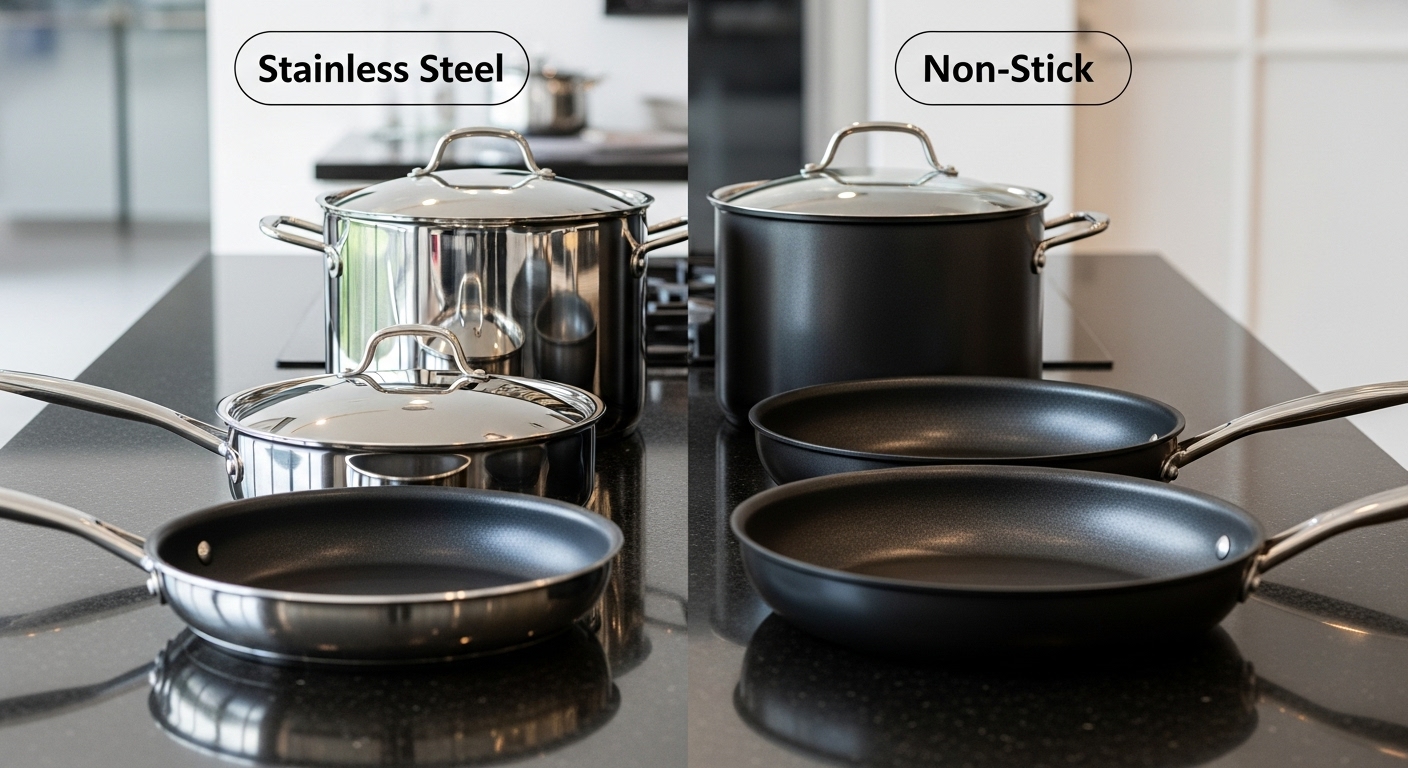
1) Stainless Steel Cookware
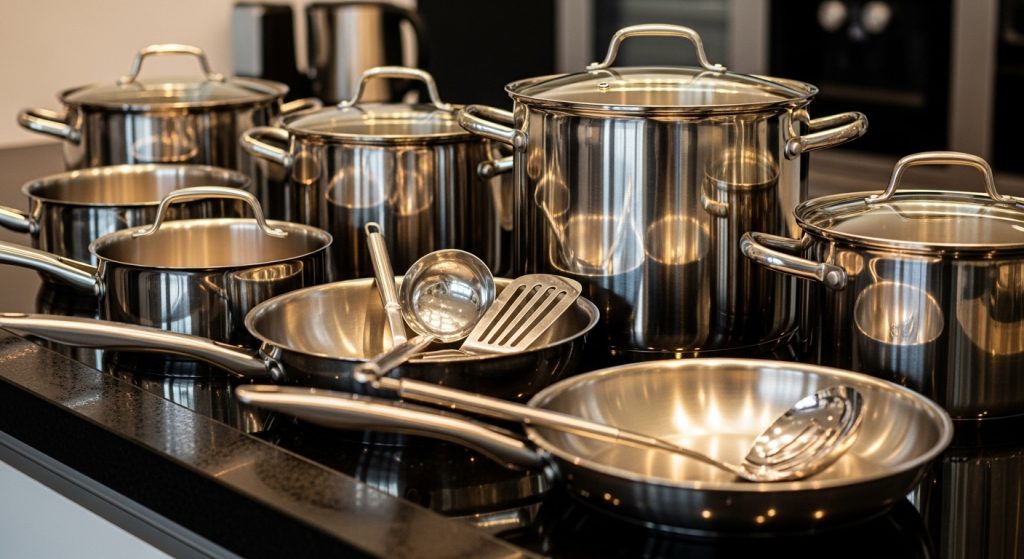
What it does best (real-life wins)
1) Searing + browning (the flavor game)
Stainless steel is the champ for building a deep crust on steak, chicken thighs, salmon skin, and even tofu. That browning = flavor.
2) Pan sauces (the “pro chef” move)
The stuck bits (fond) are a feature, not a bug. Add wine/broth/butter and you get a sauce that nonstick can’t replicate.
3) High heat + durability
Stainless can handle aggressive heat better and won’t care if you use metal utensils occasionally.
4) Longevity
A good stainless pan can last years (even decades). Scratches don’t matter much.
Downsides (what annoys people)
1) Sticking is real—if your technique is off
Eggs, delicate fish, and early flipping are where stainless can be frustrating.
2) Learning curve
You need to understand preheating, oil timing, and when food naturally releases.
3) Cleanup can take effort
Burnt-on bits happen. You’ll sometimes soak, scrub, or use a cleaner (like Bar Keepers Friend).
My experience tip (to prevent sticking)
- Preheat the pan dry 1–2 minutes (medium heat).
- Add oil after it’s warm, then wait a few seconds.
- Don’t flip too early. If it sticks, it usually means it’s not ready yet.
2) Nonstick Cookware
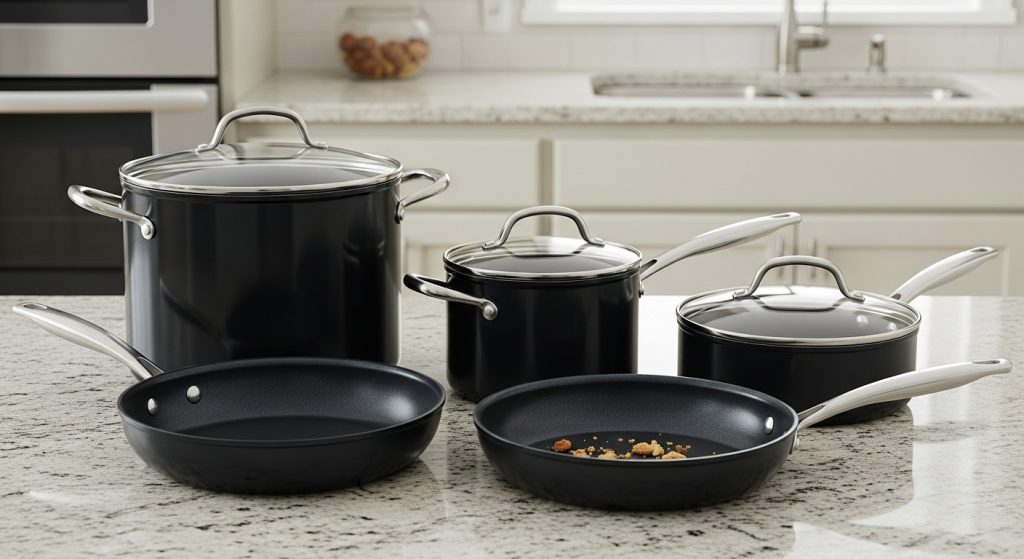
What it does best (real-life wins)
1) Eggs + pancakes + delicate fish
Nonstick makes these easy and forgiving. You can cook with less oil and still get clean release.
2) Low-stress cooking
When you’re tired, rushing, or cooking for kids—nonstick reduces friction (literally).
3) Fast cleanup
Many times it’s a wipe-and-rinse situation. That’s a big deal for daily cooking.
Downsides (what people don’t want to hear)
1) It’s a consumable
Even with perfect care, nonstick coatings don’t last forever. Performance slowly declines.
2) Heat limits
High heat can shorten lifespan fast. Nonstick is happiest at low-to-medium heat.
3) You must baby it
- No metal utensils (usually)
- Avoid abrasive scrubs
- Avoid thermal shock (hot pan under cold water)
4) Searing isn’t the same
You can brown food, but it’s usually not as deep and consistent as stainless.
My experience tip (to make it last)
- Keep heat medium or lower most of the time.
- Use silicone/wood utensils.
- Hand-wash when possible.
- Replace when it starts needing “extra oil” to release.
Head-to-Head Comparison (Straight Talk)
Flavor and browning
- Winner: Stainless Steel
If you love crust, caramelization, and pan sauces, stainless is the tool.
Convenience and daily ease
- Winner: Nonstick
If you cook fast meals, breakfast, or hate cleanup, nonstick wins.
Versatility
- Winner: Stainless Steel
Handles higher heat, oven use (often), acidic sauces, and tough tasks.
Maintenance effort
- Winner: Nonstick (short-term)
But remember: nonstick is easier day-to-day, while stainless is easier long-term because it doesn’t “wear out.”
Long-term value
- Winner: Stainless Steel
Nonstick will eventually need replacing; stainless can be a lifetime pan.
The Key Question: What Do You Cook Most?
Choose nonstick if you mostly cook:
- Eggs, omelets, pancakes
- Fish fillets that fall apart easily
- Stirring sauces, reheating, quick meals
- Low-oil cooking and you want low mess
Choose stainless steel if you mostly cook:
- Steak, chicken, chops, burgers
- Sautéed veggies where browning matters
- Pan sauces (wine/butter/lemon reductions)
- One-pan meals that start on stovetop and finish in oven
Common Mistakes (That Make People Hate Each Type)
Why people hate stainless:
- Pan not preheated
- Food flipped too early
- Not enough fat for the cooking method
- Heat too high (burning oil) or too low (sticking + steaming)
Why people hate nonstick:
- Cooking on high heat constantly
- Using metal utensils
- Dishwasher + harsh detergents
- Expecting it to sear like stainless
The Optimal Choice (My Honest Recommendation)
If you’re choosing only one type for a home kitchen:
✅ Best “one cookware type” for most people: Stainless Steel
Because it’s more versatile, lasts longer, and can handle almost anything once you learn the basics.
You can still cook many “nonstick-ish” foods in stainless with technique—but you can’t replace stainless searing and sauces with nonstick.
But here’s the real optimal setup (if you can do two pans):
1 stainless steel pan for searing + sauces
1 nonstick pan for eggs + delicate foods
That combo covers basically every cooking scenario with minimal stress.
Quick Decision Checklist
Pick stainless if you say “yes” to any of these:
- I want better browning / flavor
- I cook meat often
- I don’t want to replace pans
- I’m okay learning technique
Pick nonstick if you say “yes” to any of these:
- I cook eggs almost daily
- I want the easiest cleanup
- I prefer low-to-medium heat cooking
- I don’t want a learning curve