(Cut-Resistant Glove Tips + Perfect Slice Thickness Guide)
Mandolines are one of the fastest ways to get paper-thin cucumbers, even potato slices, and perfect onions—but they’re also the fastest way to slice your fingertip if you get casual for even one second.
I’ve learned the “respect the blade” lesson the hard way, so this guide is very practical: how to set up, how to slice safely, and what thickness actually works for common foods.
1) The 3 Safety Rules (Non-Negotiable)
Rule 1: Use protection every time
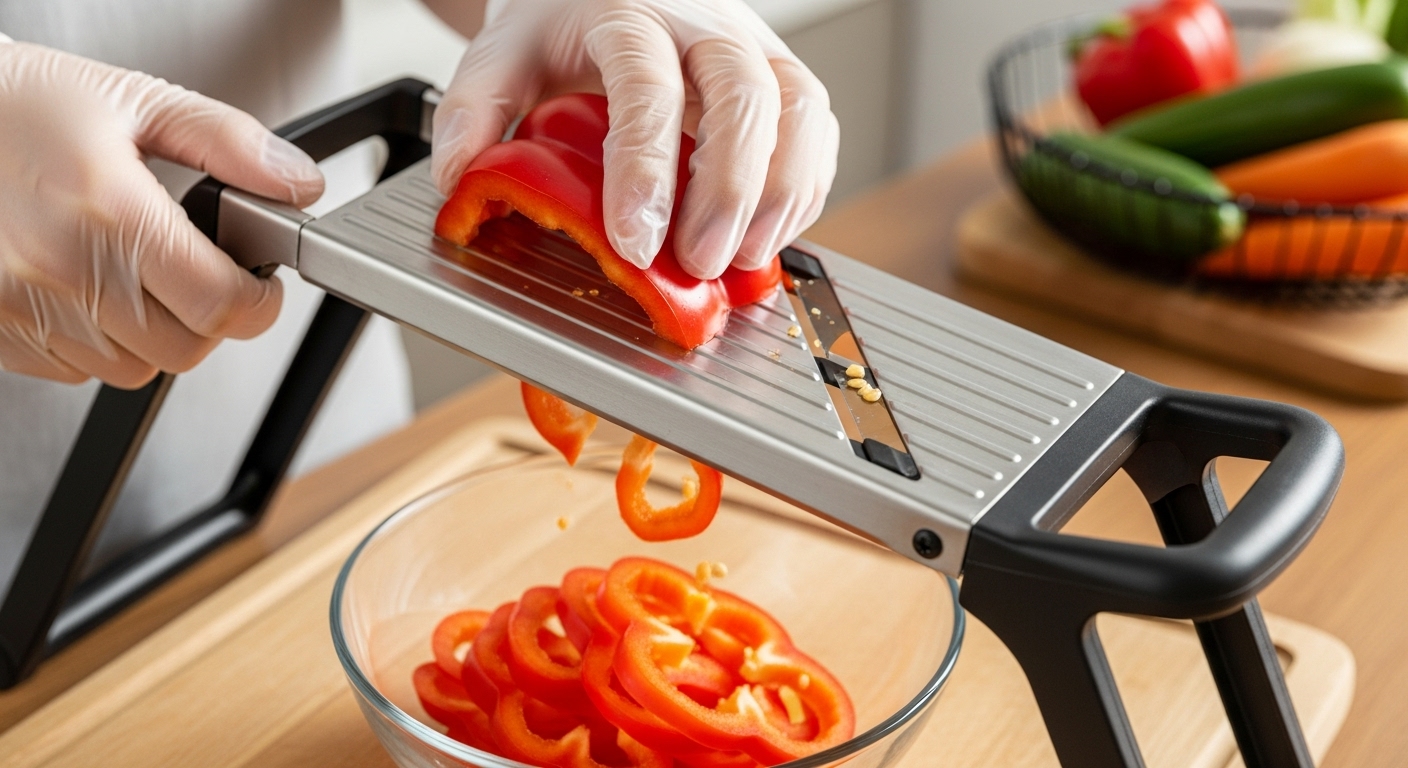
- Cut-resistant glove is the best safety upgrade.
- If you don’t have one, at minimum use the hand guard (food holder).
Rule 2: Never slice the last 1–2 inches with bare fingers
When the food gets short, stop and switch to:
- hand guard
- glove + slow strokes
- or finish with a knife
Rule 3: No distractions
No phone, no turning your head, no “one more slice” while talking. Mandolines punish autopilot.
2) Setup That Prevents Slips
Before you slice anything, do this:
Step A: Stabilize the mandoline
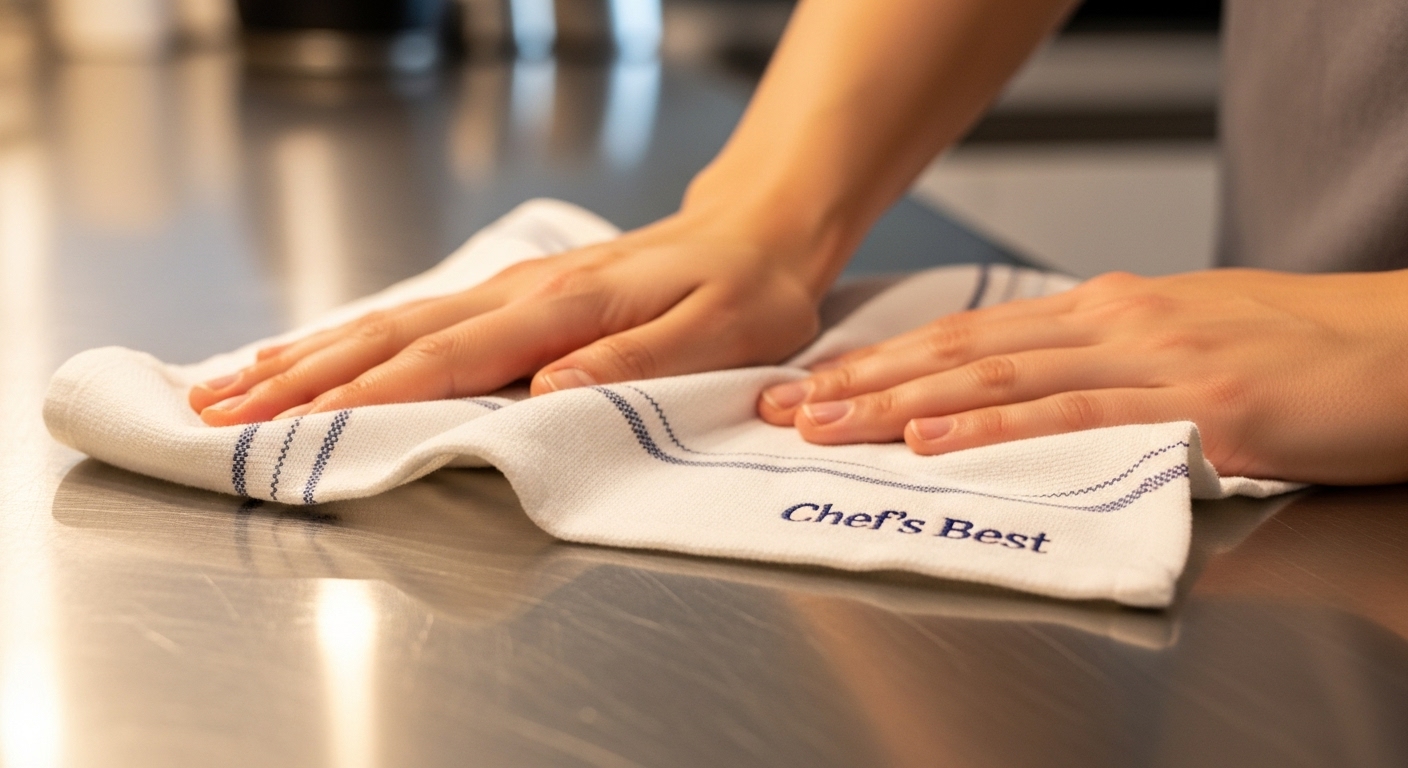
- Place it on a dry towel or non-slip mat.
- If it has legs, make sure they’re fully locked.
- Angle it so your slicing motion is smooth and straight.
Step B: Choose the blade and thickness before you start
Don’t adjust mid-slicing. That’s how accidents happen.
Step C: Prep your food for stability
- Cut a flat side on round items (cucumber, potato) so it doesn’t roll.
- Peel if needed (optional), but keep the shape stable.
3) Cut-Resistant Glove Tips (What Actually Helps)
A cut glove isn’t magic, but it’s the best backup when you slip.
How to use it properly:
- Wear it on the hand that holds the food.
- Keep fingers slightly curled—don’t “reach forward.”
- If the glove gets wet/oily, wipe it off so you still have grip.
What gloves don’t do:
- They won’t protect you from deep pressure + repeated slicing forever.
- They help prevent serious cuts, but you should still slice carefully.
Best combo: Glove + hand guard = maximum safety.
4) The Correct Slicing Technique (Fast AND Safe)
The safe motion:
- Use steady, even strokes.
- Keep the food pressed flat against the guard (or your gloved palm).
- Slice with your whole arm, not just the wrist—more control.
The unsafe motion:
- Short, fast “choppy” strokes
- Fingers near the blade
- Tilting the food at weird angles
Pro tip: If it starts to feel awkward, stop. Reset your grip. Continue.
5) Thickness Guide That Actually Works (By Food)
Mandoline thickness depends on what you’re making. Here’s a practical starting point.
Paper-thin (about 1–2 mm)
Best for:
- cucumbers for salads
- onions for sandwiches
- radishes
- quick-pickled veggies
Result: Crisp, delicate slices, fast marinating.
Thin (about 2–3 mm)
Best for:
- potato chips (classic thin chips)
- zucchini for quick sauté
- apples for baking layers
- cabbage for slaw (thin ribbons)
Result: Fast cooking, still has structure.
Medium (about 3–5 mm)
Best for:
- potatoes for gratin/scalloped potatoes
- thicker cucumber slices (snacking)
- carrots for roasting
- onions for fajitas
Result: Holds shape, better bite.
Thick (about 5–8 mm) (if your mandoline supports it)
Best for:
- “steak fries” style prep (usually you still finish with a knife)
- thick eggplant slices for grilling
Result: More chew, slower cooking, less fragile.
6) Perfect Slices for the Most Common Recipes
Homemade potato chips
- Go thin (2–3 mm)
- Rinse slices to remove starch and dry thoroughly before cooking
Gratin / scalloped potatoes
- Go medium (3–5 mm)
- Even thickness matters more than “super thin”
Cucumber salad
- Go paper-thin (1–2 mm) for quick dressing absorption
Coleslaw
- Use a thin setting, then slice cabbage into smaller wedges first for control
7) Common Mistakes (And How to Avoid Them)
Mistake 1: Skipping the hand guard because it “slows you down”
It’s not slower than going to urgent care. Use it.
Mistake 2: Slicing round foods without a flat base
Always make one flat side first so the food doesn’t roll.
Mistake 3: Trying to slice tiny leftovers
Stop early. Finish with a knife.
Mistake 4: Rushing through the last few strokes
The last strokes are where most cuts happen. Slow down at the end.
8) Cleaning the Mandoline Safely
This is another high-risk moment.
- Do not wipe the blade with a sponge like a normal tool.
- Use a brush, rinse from the back side, or remove the blade if it’s designed to.
- Always clean with the blade facing away from your hand.
Best habit: Clean it immediately after use. Dried-on starch makes people scrub harder (and cuts happen).
9) My “Safe Workflow” (What I Do Every Time)
- Towel under mandoline
- Set thickness
- Cut glove on
- Flat base on the food
- Slice slowly until it feels easy
- Stop when food gets short
- Rinse immediately + brush clean
This routine makes it fast and safe.