Seasoning a cast iron skillet isn’t about making it look shiny—it’s about building a thin, baked-on oil layer that helps with rust protection, smoother release, and better cooking performance over time.
I’ve seasoned cast iron the “wrong” way (too much oil, sticky pan, smoky kitchen) and the “right” way (thin coats, patient heat, easy maintenance). Here’s the method that consistently works.
What “Seasoning” Actually Is (In Plain English)
When you heat a very thin layer of oil on cast iron long enough, it polymerizes—turns into a dry, hard coating bonded to the metal. That layer:
- helps prevent rust
- improves food release
- makes cleanup easier
You don’t need a perfect black mirror finish on day one. Seasoning improves with use.
What You Need
- Cast iron skillet
- Dish soap + scrub brush (yes, soap is fine)
- Paper towels or lint-free cloth
- Neutral oil with a decent smoke point (grapeseed, canola, vegetable, avocado)
- Oven (best method)
- Aluminum foil or baking sheet
Optional: chainmail scrubber, coarse salt for stuck-on bits
Step-by-Step: The Best Oven Seasoning Method
Step 1: Wash and fully dry the pan
- Wash with warm water + dish soap.
- Dry immediately.
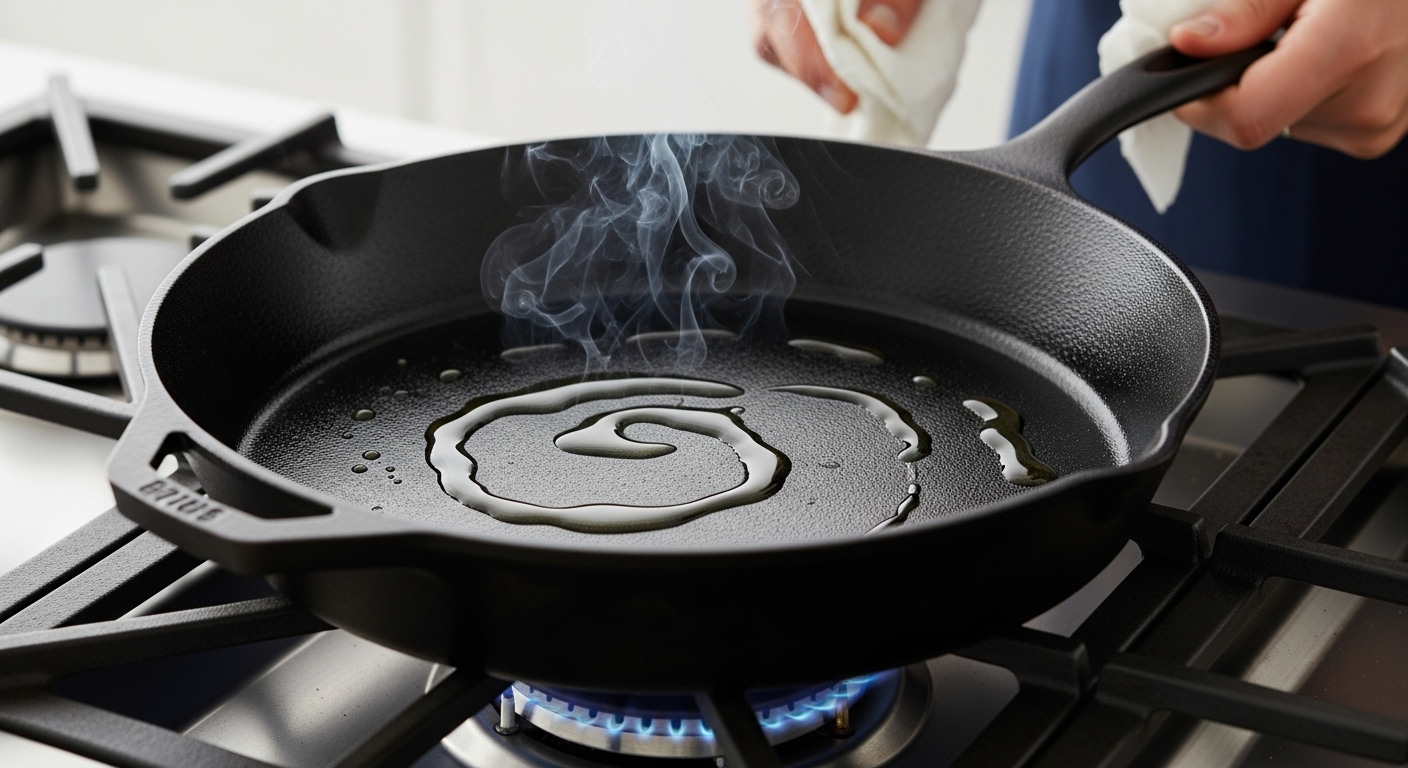
- Put it on the stove on low heat for 2–3 minutes to evaporate hidden moisture.
Why it matters: Any moisture = rust risk and weak seasoning.
Step 2: Apply oil — then wipe it off like you made a mistake
This is the most important part.
- Add a small amount of oil (think: a teaspoon-ish for a 10–12” pan).
- Rub it over every surface: inside, outside, handle, rim.
- Now wipe with clean paper towels until the pan looks almost dry.
If it looks glossy/wet, it’s too much oil.
A thin coat bakes hard. A thick coat turns sticky.
Step 3: Bake upside down at high heat
- Preheat oven to 450–500°F (232–260°C).
- Place foil or a sheet pan on the lower rack to catch drips.
- Put the skillet upside down on the top rack.
- Bake for 1 hour.
Expect some smoke. Use your vent if needed.
Step 4: Cool in the oven
Turn the oven off and let the pan cool inside for at least 30–60 minutes (or until safe to handle).
Why: Rapid cooling can mess with the layer and invites moisture.
Step 5: Repeat 2–3 rounds (optional but recommended)
For a new or stripped pan, do 2–3 total cycles.
For a pan that’s already decent, one cycle is usually enough.
After-Seasoning: How to Keep It Nonstick-ish
This part matters more than doing 10 seasoning coats.
After cooking:
- Wipe out residue while warm
- Rinse with hot water + brush (soap is okay)
- Dry fully on the stove for 1–2 minutes
- Rub a tiny drop of oil on the inside (optional but helpful)
That’s it. Consistency beats “one big seasoning day.”
Common Mistakes (And How to Fix Them)
Mistake 1: Using too much oil → sticky, gummy surface
Symptom: Pan feels tacky, uneven, or smells oily.
Fix: Bake it again at 475°F for 45–60 minutes to harden the layer.
If still sticky, scrub lightly, re-oil ultra-thin, and bake again.
Mistake 2: Seasoning at too low temperature
Symptom: Weak coating that doesn’t improve or rubs off easily.
Fix: Use 450–500°F and keep the bake time long enough (1 hour).
Mistake 3: Not drying the pan fully → rust spots
Symptom: Orange/brown rust, especially near rim or bottom.
Fix: Scrub rust off (brush + soap), dry on stove, re-season 1–2 cycles.
Mistake 4: Cooking delicate foods too early
Even well-seasoned cast iron isn’t “Teflon nonstick.” It needs technique.
Fix: For eggs/fish:
- Preheat properly
- Use enough fat
- Let food release naturally before flipping
Mistake 5: Overheating empty cast iron
Symptom: Seasoning turns patchy or burns off.
Fix: Preheat gradually, and don’t leave it empty on high heat.
Mistake 6: Acidic foods for long simmering (tomato, vinegar)
Symptom: Seasoning dulls, metallic taste, gray residue.
Fix: Short cooking is usually fine. Avoid long simmers until seasoning is strong.
If it happens: wash, dry, and do a quick oven season.
Quick “Does It Need Reseasoning?” Test
You probably don’t need a full re-season unless you see:
- persistent sticking after proper preheat/fat
- rust spots
- flaking patches
- dull gray metal exposed
For normal “food sticks a bit,” usually the fix is heat control + enough oil, not more seasoning coats.
Best Oils for Seasoning (Practical Picks)
- Grapeseed: very reliable, thin, easy to work with
- Canola/vegetable: cheap and works fine
- Avocado: good but often thicker and pricier
I avoid butter/olive oil for oven seasoning because they can be smokier and less consistent for building that hard layer.
My Personal Routine (Simple and Works)
- New pan: 2 oven cycles
- Regular use: rinse, dry on stove, tiny oil wipe
- Every few months (or if it looks dry): 1 oven cycle
This keeps it low-maintenance and avoids the sticky-oil trap.