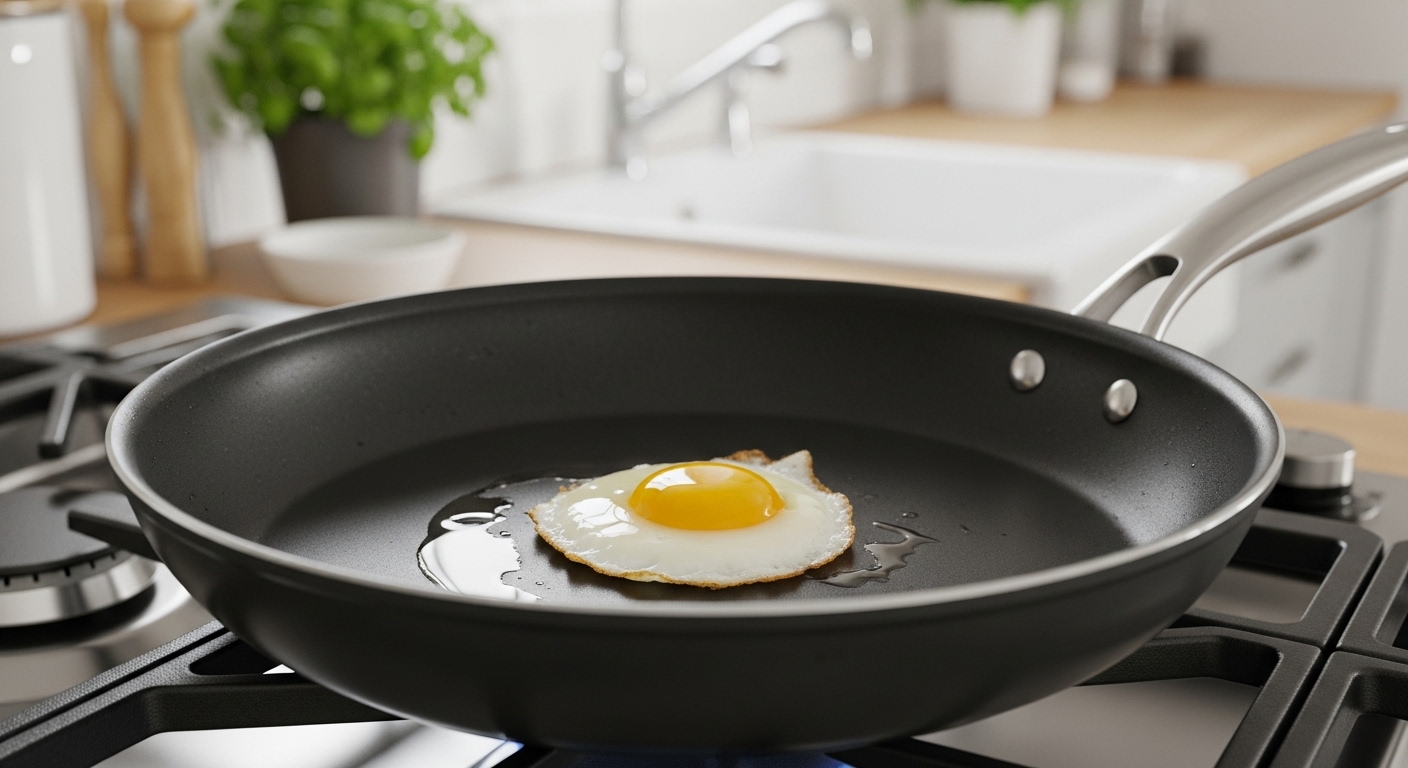
A good nonstick pan should do three things: release food easily, heat evenly, and clean up fast.
But “nonstick” can mean different coatings, different base metals, and very different real-world results.
This guide breaks down five standout picks and helps you choose the best one for your kitchen.
Note: This post may contain affiliate links.
Quick Buyer Notes (What Actually Matters)
- Safest-feeling choice: Look for brands that clearly state PFAS/PTFE-free ceramic (and follow care temps).
- Even heating: Multi-layer stainless or a thick aluminum base usually wins.
- Easy cleanup: Smooth interiors + gentle tools + low/medium heat = the longest-lasting nonstick.
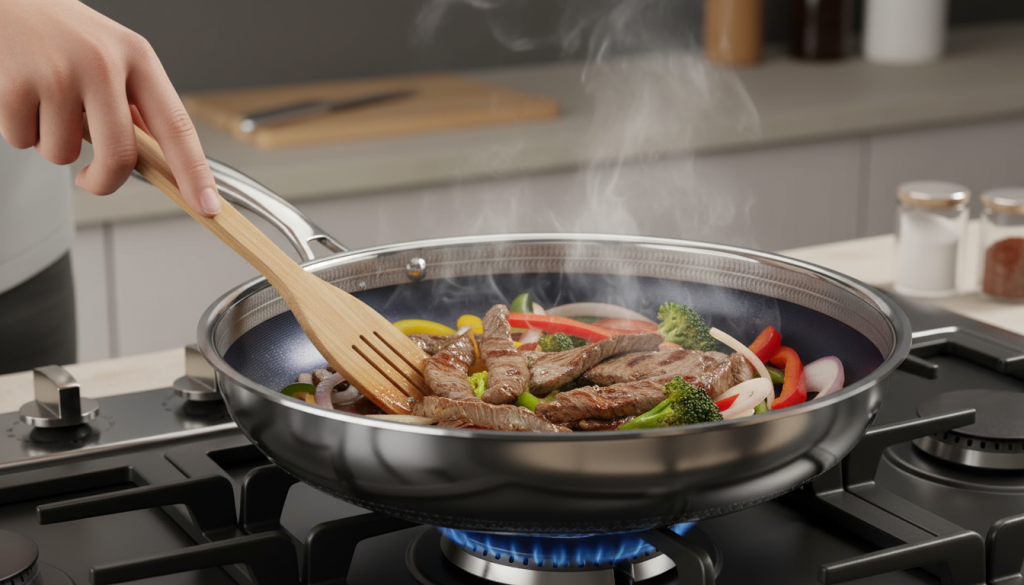
1) Hybrid Ceramic 3-Ply Stainless Nonstick Fry Pan (10″)
What it is
A hybrid ceramic nonstick pan built on a 3-ply stainless steel body (great for stability and heat distribution). The listing emphasizes a “cleaner” nonstick approach by calling out PFAS/PTFE-free ceramic.
Why it stands out
If your top priorities are even heating + safer-feeling coating claims + easy cleanup, this style checks a lot of boxes. 3-ply stainless tends to reduce hot spots compared to thinner pans.
Pros
- Very strong potential for even heating (3-ply construction)
- Ceramic nonstick positioning (often preferred by shoppers avoiding traditional PTFE)
- Usually a good “daily driver” size for eggs, sautéing, and quick dinners
Cons
- Can be heavier than simple aluminum pans
- Ceramic coatings often need gentler heat and tools to stay slick longer
Best for
Home cooks who want one versatile nonstick pan with a more premium base for steadier cooking.
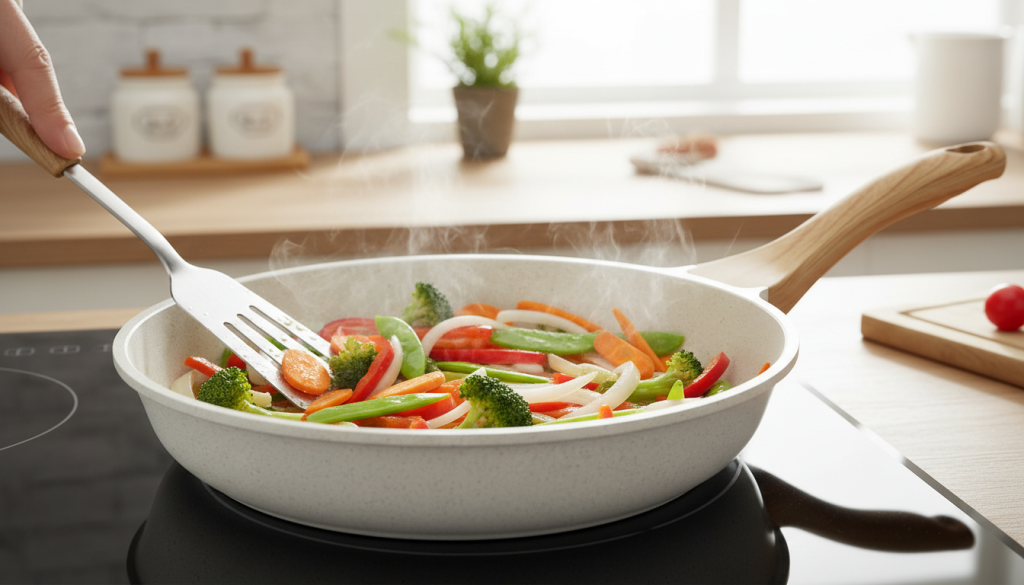
2) SENSARTE Ceramic Nonstick Omelet Pan (9.5″)
What it is
A ceramic nonstick skillet in a slightly smaller size—ideal for quick breakfasts, single portions, and weeknight basics.
Why it stands out
Smaller ceramic pans are often the easiest to live with: quick to heat, easy to rinse, and perfect for eggs, pancakes, grilled sandwiches, and reheating.
Pros
- Great size for everyday egg-and-toast cooking
- Typically lighter and faster than larger skillets
- Simple cleanup when used on low/medium heat
Cons
- Less room for crowding (crowding can make food steam instead of sear)
- Smaller pans can struggle with large proteins or family portions
Best for
Anyone who cooks breakfast often, lives solo/couple, or wants a dedicated egg pan that stays clean and easy.
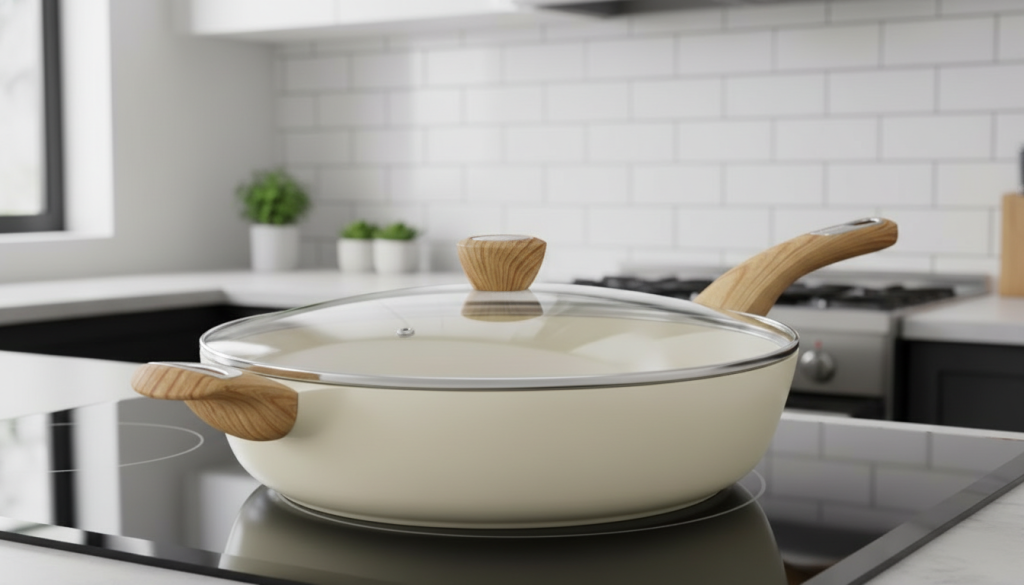
3) SENSARTE Deep Ceramic Nonstick Sauté Pan with Lid (12″)
What it is
A larger deep ceramic nonstick pan that comes with a lid, leaning more into sauté-pan territory. Think: one-pan meals and anything that splatters.
Why it stands out
The depth + lid makes this the most versatile option for messy or saucy cooking—stir-fries, shallow frying, skillet pasta, braises, and steaming.
Pros
- Deep sides help reduce splatter and hold more food
- Lid is great for simmering, steaming, melting, and finishing
- Excellent for one-pan dinners and meal prep
Cons
- Larger pans take up more space and can be awkward to wash in small sinks
- Ceramic nonstick performs best with controlled heat (don’t crank it)
Best for
Families, meal-preppers, and anyone who wants a do-it-all covered pan for weeknight cooking.
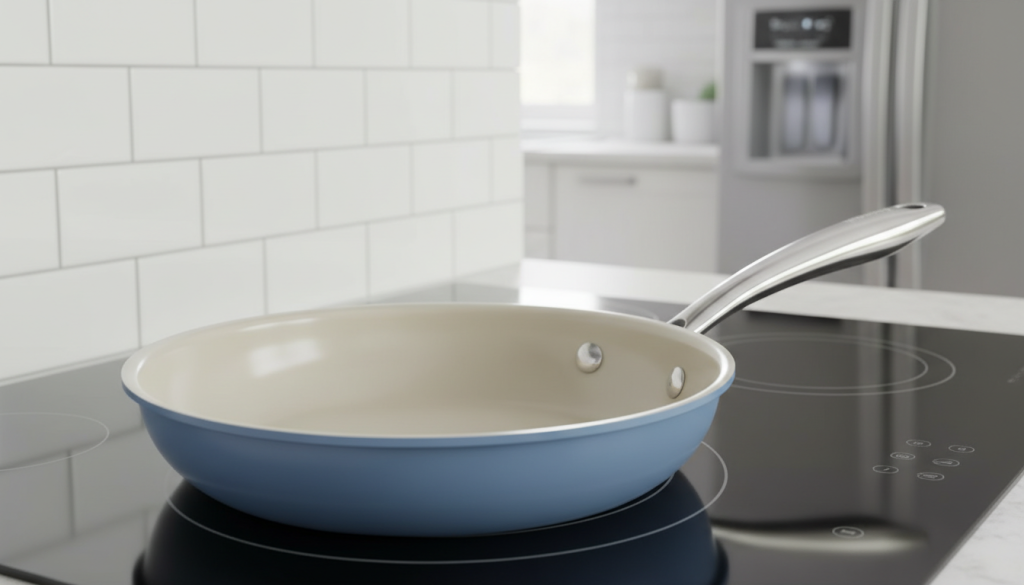
4) Redchef Ceramic Nonstick Egg Pan (8″)
What it is
A compact ceramic nonstick pan focused on eggs and small tasks—quick, simple, and easy to store.
Why it stands out
An 8″ pan is the “no-brainer” tool when you want one or two eggs without washing a big skillet afterward.
Pros
- Perfect for single eggs, small omelets, toasties
- Usually the fastest cleanup of the bunch
- Easy to handle and store
Cons
- Limited versatility beyond small portions
- Smaller surface area means less browning space
Best for
Anyone who wants a dedicated egg pan that stays clean-looking and gets used daily.
5) CAROTE “Granite-Style” Nonstick Frying Pan
What it is
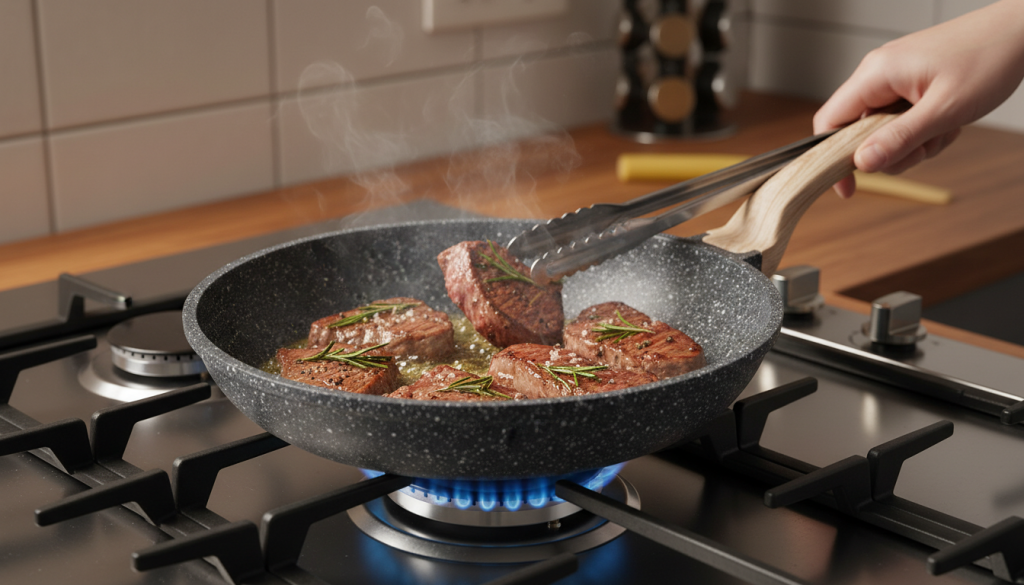
A nonstick frying pan marketed as granite-style (a common term for a speckled nonstick surface). These are popular for slick release and easy maintenance.
Why it stands out
This type often feels very nonstick right away, especially for eggs and delicate foods, and it tends to wipe clean quickly when used correctly.
Pros
- Excellent easy-release feel for delicate cooking
- Quick cleanup for everyday meals
- Often a strong pick if you want low-fuss nonstick performance
Cons
- “Granite” is usually a style/finish description, not a literal stone surface—coating specifics vary by brand
- As with most nonstick, performance depends heavily on heat control and gentle utensils
Best for
Shoppers who want a simple, super-slick nonstick pan for everyday cooking and easy cleanup.
Head-to-Head Comparison (Real-World Use)
- Most even heating: #1 (3-ply stainless construction usually shines here)
- Most versatile for dinners: #3 (deep sides + lid = weeknight hero)
- Best for eggs: #4 (8″) or #2 (9.5″) depending on portion size
- Fastest cleanup feel: #4 and #5 (small pan or very slick surface)
My Honest Take: The Optimal Pick
If you want the best balance of safer-feeling coating claims + even heating + easy cleanup, go with:
✅ Best Overall: #1 Hybrid Ceramic 3-Ply Stainless Nonstick (10″)
It’s the most “all-around” choice: steady heating, everyday size, and a coating style many shoppers prefer when they’re trying to avoid traditional nonstick chemistry.
If you cook family meals or one-pan recipes more than breakfast, the smarter “one-pan dinner” choice is:
✅ Best for One-Pan Meals: #3 Deep Ceramic Sauté Pan with Lid (12″)
The lid and depth make it more useful more often—especially for saucy, splattery, or larger-volume cooking.
Tips to Make Any Nonstick Pan Last Longer (Especially Ceramic)
- Use low to medium heat most of the time (high heat is the fastest way to shorten coating life).
- Stick to silicone, wood, or nylon utensils.
- Let the pan cool before rinsing—avoid thermal shock.
- Hand-wash when possible; if you dishwasher, keep it gentle and avoid harsh detergents.